


 [tta_listen_btn]

 October 28 2026

Some of the most important clues about a patient’s health may be hiding in plain sight, scattered across medical records, lab results, and real-time health data.
But what if care teams could connect the dots before a health risk escalates?
AI is making this shift possible by helping clinicians spot emerging risks earlier and make more informed decisions. From predictive analytics to remote patient monitoring, AI is creating new opportunities to anticipate patient needs rather than simply react to illness.
The growing use of AI in clinical practice reflects this shift. According to a 2026 American Medical Association (AMA) survey, more than 80% of physicians now use AI in their professional work. This growing adoption creates opportunities to identify risks earlier and deliver more timely care.
However, predictions alone won’t improve care. Healthcare teams also need connected data, reliable predictions, and clinical workflows that help teams act on those insights.
Difference Between Reactive and Proactive Healthcare
Traditionally, healthcare has been reactive. You visit your doctor when symptoms appear, get tests to find the cause, and receive treatment based on the diagnosis. This approach remains essential, but it often means action begins after a health problem has already developed.
Proactive healthcare takes a different approach. Instead of waiting for symptoms to appear or a condition to worsen, care teams look for early risk signs and opportunities to intervene sooner. Here’s how the two approaches compare:
| Reactive Care | Proactive Care |
| Responds after symptoms or health problems emerge. | Looks for early signs of potential health problems |
| Relies on scheduled visits, reported symptoms, and periodic tests | Uses patient data and ongoing monitoring to track changes in health |
| Focuses on diagnosing and treating existing conditions | Focuses on identifying risks and supporting early intervention |
| Manages complications after they occur | Aims to reduce the risk of complications through timely action |
| Uses patient data mainly to guide diagnosis and treatment | Analyzes data patterns to help identify emerging risks |
AI makes this approach more practical by helping healthcare teams use patient data to act earlier. Let’s look at how AI supports a more proactive approach to patient care.
How is AI Making Proactive Healthcare Possible?
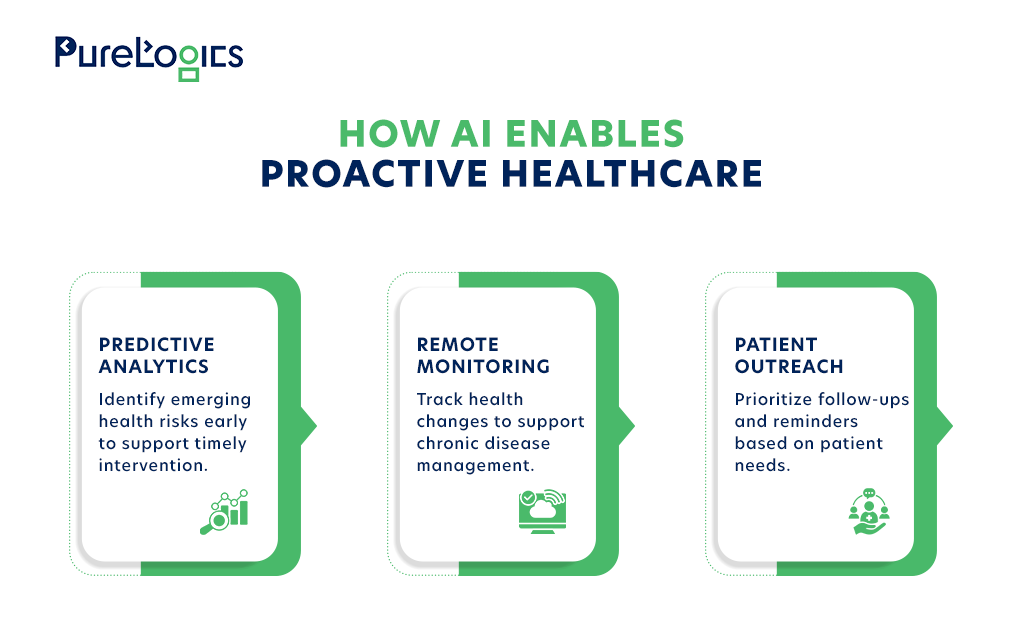
Think about how much can change between a patient’s appointments. A condition may progress, symptoms may develop, or follow-up may get delayed. AI creates opportunities to close these gaps, helping healthcare teams focus beyond individual visits and support patients throughout their care journey. Here’s how this works in practice:
Predictive Analytics for Early Intervention
Predictive analytics uses historical and current patient data to estimate the likelihood of future health events. Machine learning models can analyze diagnoses, lab results, medications, vital signs, and hospital visits to identify patterns associated with specific risks.
Common applications include:
- Early warning systems: Analyze vital signs and other clinical measurements to flag signs of potential deterioration and prompt timely assessment.
- Patient risk prediction: Estimates the likelihood of outcomes such as hospital readmission or disease complications, helping care teams identify patients who may need additional support.
For example: A hospital can use a validated readmission risk model to identify patients who may need additional support after discharge. The care team can review each patient’s circumstances and arrange follow-up visits, medication reviews, or additional recovery support.
These models don’t make clinical decisions or guarantee that complications will be prevented. They help your clinicians identify potential risks earlier and decide where intervention may make the greatest difference.
Turn Patient Data Into Actionable Insights
Build custom healthcare software with AI-powered capabilities tailored to your workflows, business goals, and patient needs.
Remote Patient Monitoring and Chronic Disease Management
Predictive models help identify patients at risk, but care teams also need to understand how a patient’s health changes over time. Remote patient monitoring provides that ongoing view, particularly for people managing chronic conditions such as diabetes, hypertension, and heart disease.
Connected devices, including blood pressure monitors and glucose sensors, collect readings at home and transmit them to monitoring platforms. AI-powered healthcare software can analyze these measurements over time, identify concerning trends, and flag readings for clinical review. For example: A patient with hypertension records elevated blood pressure over several days. An AI-enabled monitoring platform flags the trend so the care team can review the readings and decide if follow-up is needed. This approach helps clinicians:
- Track changes in blood pressure, glucose levels, and other measurements.
- Identify patterns that may indicate a need to review the current care plan.
- Prioritize alerts according to clinical thresholds and the patient’s individual risk.
Effective monitoring also requires clear alert-handling protocols. Your team needs to distinguish urgent concerns from routine changes and ensure each alert reaches the appropriate clinician. Treatment decisions should remain under qualified clinical oversight.
Proactive Patient Outreach and Follow-Up
Identifying a risk is only useful if the patient receives appropriate follow-up. Missed screenings, delayed appointments, and incomplete post-discharge check-ins can leave gaps in care.
AI Agents can help address these gaps by coordinating routine administrative tasks across connected EHR and scheduling systems. They can help your team:
- Identify patients due for screenings or follow-up visits.
- Send appointment reminders and approved follow-up instructions.
- Flag missed appointments and route unresolved requests to the appropriate staff.
Conversational AI can also answer routine patient questions, explain appointment instructions, and help patients schedule visits. When a patient reports concerning symptoms or asks for advice that requires clinical judgment, the system should direct them to qualified healthcare staff.
Together, these applications help healthcare teams monitor patient needs beyond scheduled appointments, prioritize follow-up, and respond to emerging concerns. However, putting them into practice requires reliable data, well-integrated workflows, and clear clinical oversight.
What Challenges Can Limit AI-Driven Proactive Care?
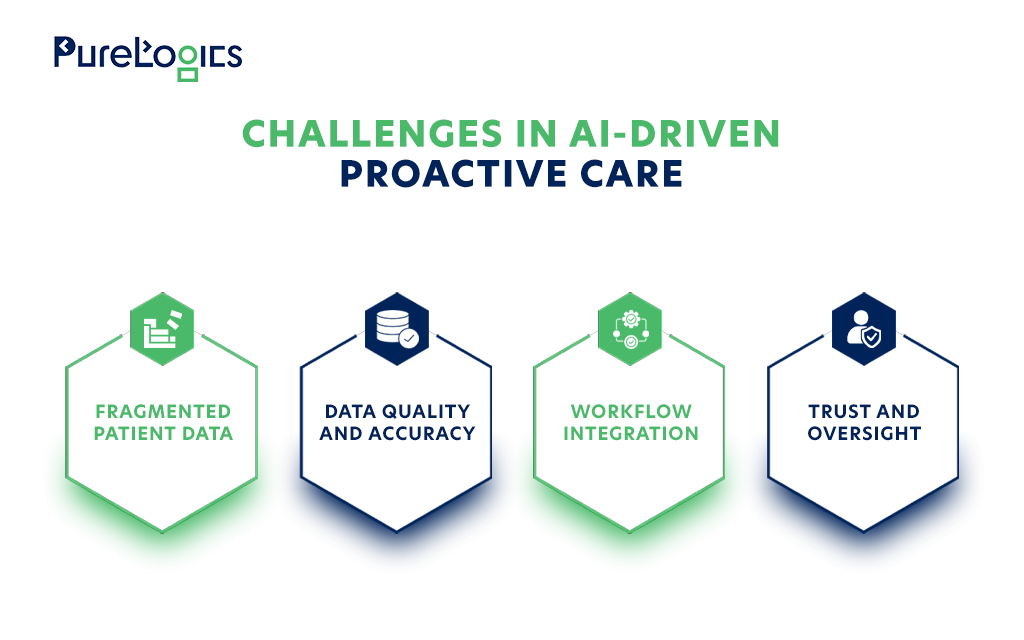
Moving to proactive care takes more than adopting AI tools. Clinical teams must address a few practical challenges to ensure AI insights lead to the right clinical action.
Fragmented Patient Data
Fragmented healthcare data often sits across EHRs, laboratory systems, and remote monitoring platforms. When these systems don’t exchange information effectively, AI models may lack important details about a patient’s health, weakening the reliability of their predictions.
You need reliable data exchange between these systems so clinicians and AI tools can work with a more complete patient record.
Data Quality and Prediction Reliability
Incomplete records, outdated information, and biased training data can reduce AI prediction accuracy. A model may underestimate a patient’s risk if it lacks recent test results or relevant medical history.
Validate models against the populations they serve, monitor their performance, and review false alarms and missed risks to identify problems early.
Clinical Workflow Integration
An alert won’t improve care if it gets lost among routine notifications or no one knows who should respond. Poorly integrated AI tools can add to clinicians’ workloads instead of helping them prioritize patients.
Define who reviews each alert, what action is expected, and when concerns must be escalated. Track alert volumes and response times to identify workflow bottlenecks and reduce alert fatigue.
Trust, Oversight, and Accountability
Clinicians need to understand what an AI model can and cannot tell them. Unclear recommendations or inconsistent performance can make staff reluctant to use its output.
Build trust through clear oversight policies, strong patient data protections, and clinician review of AI-generated insights. AI should support clinical judgment, with clear accountability for the decisions that follow.
What Role Does Healthcare Software Play in Proactive Care?
AI models need healthcare software to turn predictions into clinical action. Healthcare software connects patient data, delivers AI insights to clinicians, and supports timely follow-up.
Four key components support this process:
- Data integration: Connects patient records, lab results, and monitoring data across systems using standards such as FHIR.
- AI capabilities: Runs predictive models on this combined data to identify health risks and generate risk scores or alerts for clinical review.
- Workflow integration: Delivers alerts through the EHR or clinical tools care teams already use and assigns each alert to the right person or team.
- Oversight layer: Tracks who reviewed each alert, what action followed, and how the outcome was recorded, with access controls and audit trails supporting HIPAA compliance.
For Example:
A hospital’s readmission risk model flags a patient before discharge. The software adds a task to a nurse’s queue inside the EHR, along with the main factors behind the score. After discharge, the nurse contacts the patient, coordinates the appropriate follow-up, and records the outcome. Over time, these records help the team evaluate how alerts are handled and identify where the workflow or model needs improvement.
When these layers work together, an AI insight reaches a clinician with the context and ownership needed to act on it. When one is missing, the insight can stall. That is why the software around the model matters as much as the model itself.
Moving Toward Proactive Healthcare
AI gives healthcare teams a clearer picture of emerging health risks, changes in a patient’s condition, and gaps in follow-up. The next step is applying these capabilities where they can make a practical difference. Start with a clear priority, such as reducing readmissions, improving chronic disease management, or helping patients stay on track with their care.
At PureLogics, we build HIPAA-compliant healthcare software and AI solutions for hospitals and care teams. Our solutions connect patient data and clinical workflows, helping clinicians act on AI insights and support more proactive patient care.
Frequently Asked Questions
1. What does proactive mean in healthcare?
Proactive healthcare focuses on identifying health risks early and taking action before a condition worsens. It includes regular screenings, monitoring patient health, identifying risk factors, and scheduling timely follow-ups to help prevent complications.
2. How is AI used in proactive healthcare?
AI helps healthcare teams identify health risks early, monitor patient health, and prioritize follow-ups. Predictive analytics flags potential complications, while AI-powered monitoring tracks changes in vital signs. AI Agents automate routine follow-ups and appointment reminders, helping care teams respond to patient needs sooner.
3. What is the difference between preventive and proactive healthcare?
Preventive healthcare reduces disease risk through screenings, vaccinations, and lifestyle changes. Proactive healthcare uses patient data and ongoing monitoring to detect risks early and guide timely intervention. Both aim to improve health outcomes, but proactive care also focuses on identifying changes before conditions worsen.